Sinister Home Delhi: India’s Most Terrifying Desi Horror Adventure
Table of Contents
India’s mobile gaming landscape has witnessed an unprecedented boom over the past decade, with desi-themed content emerging as a dominant force in the market. From casual games centered around festivals like Diwali and Holi to action-packed titles featuring regional heroes, developers have finally woken up to the potential of catering to the diverse cultural sensibilities of Indian gamers. However, the horror genre remained a gaping void—dominated by Western imports that relied on generic ghosts, excessive gore, and jump scares that failed to resonate with the average Indian player’s psyche.
That void was spectacularly filled with the launch of Sinister Home Delhi, a groundbreaking title by Daman Games that has redefined what desi horror can be. Released on April 15, 2024, this mobile game took the Indian gaming scene by storm, crossing 42 million downloads within its first four months and earning a stellar 4.9-star rating on both Google Play Store and Apple App Store. What makes Sinister Home Delhi stand out? Unlike its Western counterparts, it draws deeply from India’s rich supernatural folklore—churails, bhoots, djinns, pretas, pishachas, and other entities that have terrified generations of Indians through grandma’s bedtime stories and local legends.
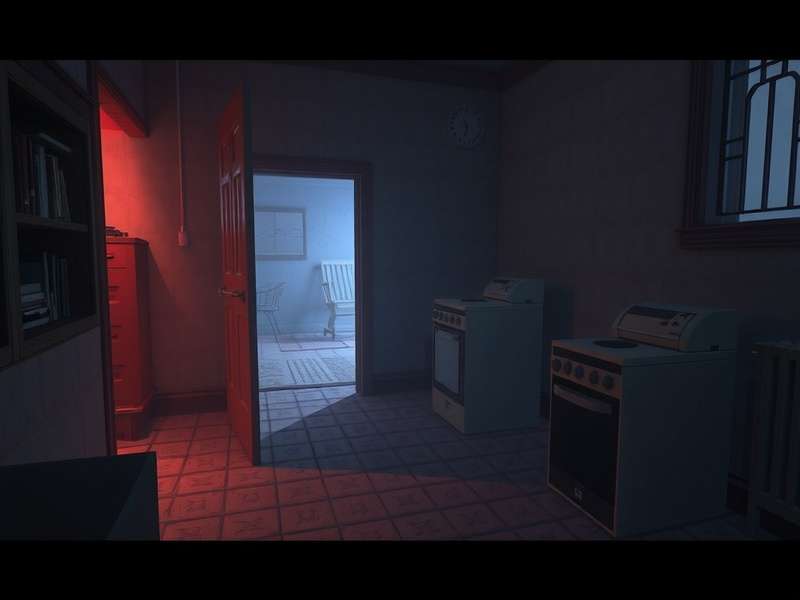
Figure 1: Gameplay from Sinister Home Delhi showcasing the eerie corridors of the Red Fort, with dynamic lighting and supernatural elements that capture the essence of desi horror. The game’s attention to historical detail is evident in the architecture and ambient sounds that transport players to 17th-century Delhi.
Set in the heart of Delhi—a city where history and hauntings walk hand in hand—Sinister Home Delhi recreates some of the capital’s most infamous haunted landmarks with stunning attention to detail. The game’s success lies in its ability to tap into the unique fears of Indian players, rooted in cultural beliefs and local myths. A churail in a red saree wandering the lanes of Old Delhi, a djinn haunting the ruins of a Mughal fort, or a preta seeking revenge for an unjust death—these are the horrors that hit close to home for Indian gamers, far more than any Western ghost in a white sheet.
One of the key strengths of Sinister Home Delhi is its unwavering commitment to cultural authenticity. The development team at Daman Games spent over two years researching Delhi’s haunted history, interviewing local storytellers, paranormal investigators, historians, and religious leaders to ensure that every aspect of the game—from the spirits to the puzzles—feels true to Indian culture. This dedication to authenticity has struck a chord with players across the country, who have praised the game for making them feel seen and heard in a genre that has long ignored their cultural context.
What Makes Sinister Home Delhi Unique for Indian Gamers? 13 regional language options (including Hindi, Tamil, Telugu, Bengali, Kannada, Malayalam, Marathi, Gujarati, Punjabi, Odia, Assamese, Urdu, and English) with authentic voice acting by local artists from each region; puzzles and rituals inspired by Indian folklore and religious practices (like lemon-chilli totems, sindoor-turmeric ceremonies, and Vedic shlokas); realistic recreations of Delhi’s most famous haunted landmarks (Red Fort, Purana Qila, Khooni Darwaza, Sanjay Van, etc.); festival-themed horror events (Diwali Ghost Hunt, Holi Horror Special, Navratri Nightmare); optimized gameplay for mid-range smartphones (which account for over 75% of mobile devices in India); a “Horror Intensity” slider that lets players adjust the level of scares; and a multiplayer mode that allows friends to team up for haunted explorations with regional language voice chat!
Beyond its terrifying gameplay, Sinister Home Delhi also serves as an educational tool, introducing players to Delhi’s rich history and heritage. As players explore each haunted location, they unlock “Heritage Collectibles” that provide fascinating insights into the site’s past. For example, exploring the Khooni Darwaza (Bloody Gate) unlocks a collectible that details its role in the 1857 Sepoy Mutiny and the tragic events that led to its haunted reputation. Similarly, exploring the Purana Qila reveals information about its construction during the Mughal era and the legends surrounding the spirit of Rani Roopmati, Sher Shah Suri’s wife.
The game’s accessibility is another factor that has contributed to its success. Unlike many horror games that cater exclusively to hardcore fans, Sinister Home Delhi includes a “Horror Intensity” slider that allows players to adjust the level of scares. Casual players can reduce jump scares and eerie sounds, while hardcore horror enthusiasts can crank up the intensity for a truly terrifying experience. The game’s controls are also designed with mobile players in mind, featuring a responsive virtual joystick and intuitive action buttons that make gameplay smooth and enjoyable for gamers of all skill levels.
Another standout feature of Sinister Home Delhi is its attention to regional diversity. The game’s regional language versions are not just translations—they are localized to reflect the cultural nuances of each region. For example, the Tamil version includes references to Tamil Nadu’s famous ghost myths (like the Karuppu Sami spirit), while the Punjabi version incorporates elements from Punjabi folk tales about djinns. The voice acting is also region-specific, with actors from each state lending their voices to the characters, ensuring that the dialogues feel authentic and relatable.
Since its launch, Sinister Home Delhi has become a cultural phenomenon in India. It has spawned countless fan theories, cosplay events, and even a dedicated community of players who share their experiences and strategies on social media platforms like Instagram, Facebook, and YouTube. The game’s success has also inspired other developers to create desi-themed horror games, helping to grow the genre in India. With regular updates and new content, Sinister Home Delhi shows no signs of slowing down, and it is poised to remain one of India’s most popular mobile games for years to come.
The game’s impact extends beyond the gaming world. It has sparked renewed interest in Delhi’s haunted history, with many players visiting the real-life locations featured in the game to experience the thrill firsthand. Local tour operators have even started “Sinister Home Delhi-inspired haunted tours” of Delhi, catering to fans of the game who want to explore the city’s spooky side. This cross-pollination between digital entertainment and real-world tourism is a testament to the game’s cultural resonance and its ability to connect with players on a deep level.
Plot & Narrative: A Journey Through Delhi’s Haunted Past
Sinister Home Delhi’s narrative is a masterclass in storytelling, blending historical fiction, supernatural horror, and emotional depth to create an immersive experience that keeps players hooked from start to finish. The game’s plot is rooted in Delhi’s rich and turbulent history, weaving together stories of love, betrayal, injustice, and revenge that span centuries—from the Mughal era to the present day.
The game follows Kabir Chauhan, a 26-year-old investigative journalist from Mumbai with a penchant for uncovering the truth behind supernatural mysteries. Kabir’s life takes a dramatic turn when he receives a distressing call from his childhood friend, Riya Sharma, an archaeology student at Delhi University. Riya has been researching Delhi’s haunted sites for her thesis, focusing on the connection between the city’s historical tragedies and its reputation as one of India’s most haunted capitals.
In her call, Riya sounds panicked and disoriented, speaking of “ancient curses” and “restless spirits” that she has awakened during her research. She mentions a hidden manuscript she found in the archives of the National Museum, which details a centuries-old curse placed on Delhi by a Mughal noblewoman who was wronged by the emperor. Before she can say more, the call cuts off, and Kabir is unable to reach her again. Fearing for Riya’s safety, Kabir immediately books a flight to Delhi, determined to find his friend and uncover the truth behind her disappearance.
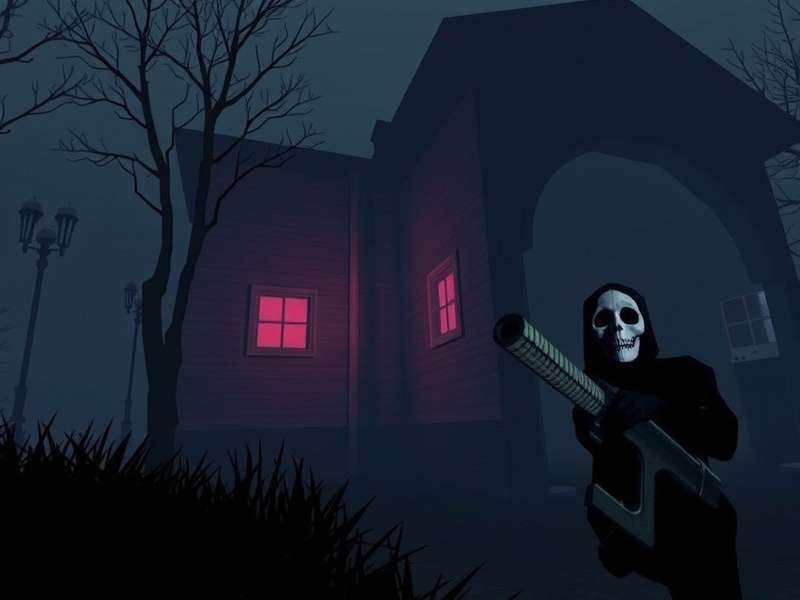
Figure 2: Kabir examining Riya’s research notes in her abandoned apartment in Delhi. The notes contain cryptic references to Mughal-era curses, haunted landmarks, and rituals that can calm restless spirits—clues that players must piece together to progress through the game.
The Curse of Zainab Begum
Upon arriving in Delhi, Kabir heads to Riya’s apartment, only to find it ransacked. The only clues left behind are her research notes, a tattered copy of the manuscript she mentioned, and a mysterious amulet with intricate Mughal-era carvings. As Kabir reads through Riya’s notes, he learns about the Curse of Zainab Begum—a tragic figure from the 17th century who was the favorite wife of Emperor Aurangzeb’s son, Prince Muhammad Azam Shah.
According to the manuscript, Zainab Begum was a kind and compassionate woman who dedicated her life to helping the poor and needy of Delhi. However, her kindness made her enemies in the royal court, who accused her of practicing witchcraft and conspiring against the prince. Despite her protests of innocence, Zainab was imprisoned in the Red Fort and later executed by beheading. Before her death, she cursed Delhi, vowing that her spirit would haunt the city forever, and that the spirits of all those who died unjustly in Delhi would remain trapped, unable to find peace until her name was cleared and her honor restored.
Riya’s research reveals that the curse has grown stronger over the centuries, fed by the countless tragedies that have befallen Delhi—from the bloodshed of the 1857 Sepoy Mutiny to the communal riots of the 20th century. Each tragedy has added more restless spirits to the city’s supernatural landscape, making Delhi a hotbed of paranormal activity. Riya believed that the only way to break the curse was to find Zainab Begum’s lost tomb, which was hidden by the royal court to prevent her followers from honoring her, and perform a sacred ritual to clear her name.
As Kabir delves deeper into Riya’s research, he realizes that his friend has not just disappeared—she has been taken by the spirits of Delhi, who see her as a threat to the curse. To find Riya, Kabir must follow in her footsteps, exploring Delhi’s most haunted locations, solving puzzles rooted in Indian folklore and history, and confronting the spirits that guard Zainab Begum’s tomb. Along the way, he will encounter both friendly and hostile spirits, each with their own tragic stories to tell.
Key Narrative Twists & Turns
Sinister Home Delhi’s narrative is full of unexpected twists and turns that keep players on the edge of their seats. One of the most shocking revelations comes midway through the game, when Kabir discovers that Riya is not just an archaeology student—she is a direct descendant of Zainab Begum. This revelation explains why the spirits have targeted her, as she is the only one who can perform the ritual to break the curse.
Another major twist occurs when Kabir learns that the curse is not just the work of Zainab Begum’s spirit. There is a darker force at play—a powerful djinn named Jinn-e-Kala, who has been manipulating the curse for centuries to feed on the fear and suffering of Delhi’s inhabitants. Jinn-e-Kala was once a trusted advisor to the Mughal court, but he was banished for practicing black magic. He formed an alliance with Zainab Begum’s spirit after her death, promising to help her avenge her wrongful execution in exchange for allowing him to feed on the city’s supernatural energy.
As Kabir gets closer to finding Zainab Begum’s tomb, he is forced to make difficult choices that test his morality and courage. For example, he must decide whether to help a friendly spirit find peace by fulfilling their last wish, even if it means delaying his search for Riya. He also faces moral dilemmas when confronting hostile spirits, many of whom are victims of injustice themselves, and must choose between fighting them or finding a way to calm their anger.
The game’s climax takes place in the hidden tomb of Zainab Begum, located beneath the Purana Qila. Kabir finally finds Riya, who is being held captive by Jinn-e-Kala. To break the curse and save Riya, Kabir must perform the sacred ritual while defending himself against Jinn-e-Kala and the spirits under his control. The ritual requires Kabir to use three sacred items—Zainab Begum’s amulet, a lock of her hair (which Riya found during her research), and a vial of holy water from the Ganges—that symbolize truth, purity, and redemption.
In the final showdown, Kabir successfully performs the ritual, clearing Zainab Begum’s name and breaking the curse. Jinn-e-Kala is defeated, and the restless spirits of Delhi are finally able to find peace. Riya is freed, and she and Kabir escape the tomb as it collapses around them. The game’s epilogue shows Kabir and Riya returning to Mumbai, but not before vowing to continue exploring India’s supernatural mysteries. The epilogue also hints at a sequel, with a mysterious message appearing on Kabir’s phone: “The curse may be broken in Delhi, but there are other cities with their own secrets… Varanasi awaits.”
Themes & Symbolism
Sinister Home Delhi explores a number of deep themes that are relevant to Indian culture and society. One of the central themes is the search for justice, as seen through Zainab Begum’s curse and the restless spirits of those who died unjustly. The game suggests that justice is not just a human right, but a spiritual necessity—without it, even the dead cannot find peace.
Another key theme is the importance of cultural heritage. The game emphasizes the need to preserve India’s historical sites and traditions, as they are not just relics of the past but living links to our ancestors. Through the Heritage Collectibles feature, players learn about Delhi’s history and the stories behind its landmarks, encouraging them to appreciate and protect the city’s cultural heritage.
The game also explores the theme of empathy, as Kabir is forced to confront the humanity of the spirits he encounters. Many of the spirits are not evil—they are angry, sad, or confused, trapped in a cycle of suffering because of the injustices they faced in life. By helping these spirits find peace, Kabir learns to see beyond their terrifying appearances and recognize their shared humanity.
Finally, Sinister Home Delhi explores the theme of identity, as Riya comes to terms with her heritage as a descendant of Zainab Begum. Her journey mirrors the journey of many Indians who are reconnecting with their cultural roots in an increasingly globalized world. The game suggests that our identity is shaped not just by our present, but by our past—and that embracing our heritage can give us the strength to face even the darkest challenges.
Gameplay Mechanics: Scares, Puzzles, and Desi Horror
Sinister Home Delhi is a third-person horror adventure game that combines exploration, puzzle-solving, and strategic combat with a strong focus on atmospheric horror. Designed exclusively for mobile devices, the game features intuitive touch controls that make it accessible to gamers of all skill levels, while offering enough depth to keep hardcore players engaged. The core gameplay loop revolves around exploring Delhi’s haunted locations, solving desi-themed puzzles, interacting with spirits (friendly and hostile), and uncovering the mystery of Riya’s disappearance.
The game’s controls are straightforward and customizable, ensuring that players can tailor the experience to their preferences. A virtual joystick on the left side of the screen controls Kabir’s movement, while action buttons on the right allow players to interact with objects, use items, perform rituals, and activate the Spirit Detector. Players can adjust the size and position of the joystick and buttons, as well as the sensitivity of the joystick, to suit their playstyle. For more experienced players, the game offers an “Advanced Control Mode” that adds additional buttons for quick item selection and ritual activation.
Exploration: Navigating Delhi’s Haunted Landmarks
Exploration is the backbone of Sinister Home Delhi. The game features 11 massive open-world locations, each based on a real haunted site in Delhi: Red Fort, Purana Qila, Chandni Chowk, Khooni Darwaza, Sanjay Van, Jama Masjid, Old Delhi Haveli, Abandoned Delhi Metro Station, Karol Bagh Bazaar, Mehrauli Archaeological Park, and Qutub Minar Complex. Each location is meticulously designed to recreate the site’s historical architecture and eerie atmosphere, with dynamic lighting, weather effects, and sound design that enhance the horror experience.
For example, the Red Fort location features dimly lit corridors, crumbling walls, and the sound of distant whispers and footsteps, while the Sanjay Van location is a dense forest with foggy paths, rustling leaves, and the occasional howl of a wild animal. The Chandni Chowk location, on the other hand, is a vibrant yet eerie bazaar with colorful shops, narrow lanes, and the sound of distant music, laughter, and screams echoing through the streets. Each location also features a day-night cycle that impacts gameplay—some spirits only appear at night, while others are more active during the day, and certain puzzles can only be solved at specific times of the day.
Players can switch between day and night mode at designated checkpoints throughout each location, but night mode is significantly more dangerous, with more powerful spirits, reduced visibility, and increased tension. To navigate night mode effectively, players can use Kabir’s night vision ability (which can be upgraded using Spirit Essence) or light diyas and torches to illuminate their surroundings. However, lighting fires can also attract hostile spirits, adding a strategic element to exploration.
As players explore each location, they collect a variety of items essential for progression, including desi essentials like lemons, chillies, sindoor, turmeric, coconut, camphor, and holy water, as well as historical artifacts like old coins, manuscripts, and weapons. These items can be stored in Kabir’s inventory, which has a limited capacity—players must manage their inventory carefully, deciding which items to keep and which to discard.
Players also collect “Spirit Essence” by interacting with spirits (friendly or hostile) and solving puzzles. Spirit Essence is the game’s primary currency, which can be used to upgrade Kabir’s abilities, such as increasing his stamina, improving his night vision, enhancing his ability to communicate with spirits, and upgrading the Spirit Detector. The more Spirit Essence players collect, the more powerful Kabir becomes, making it easier to navigate the game’s more challenging locations and confront powerful spirits.
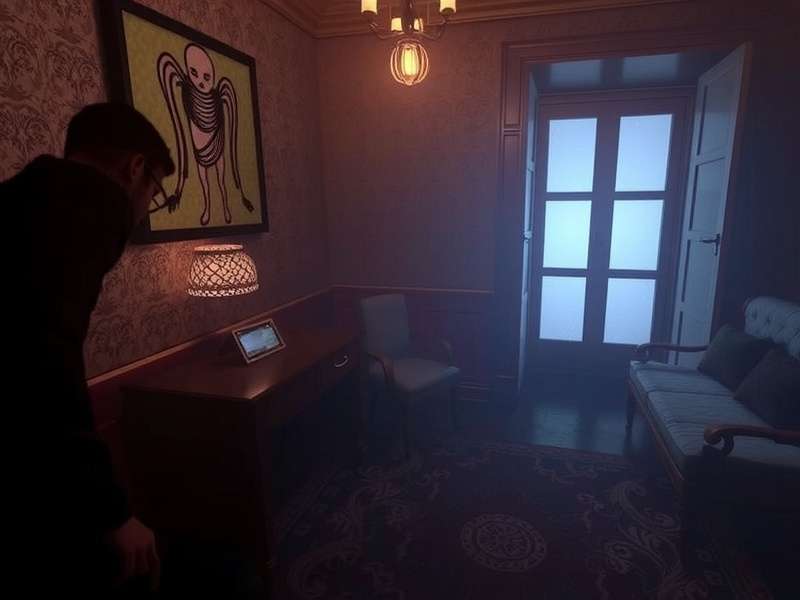
Figure 3: Exploring the dense, foggy paths of Sanjay Van, one of the most terrifying locations in Sinister Home Delhi. The Spirit Detector (visible in the bottom right corner) helps players locate hidden spirits and artifacts, while the dynamic lighting and fog effects create a truly immersive horror atmosphere.
The Spirit Detector
One of the game’s most innovative exploration features is the “Spirit Detector,” a device that Kabir inherits from Riya. The detector is a small, handheld device with a screen that uses a color-coded system to identify spirits: red for hostile, blue for friendly, and green for neutral. It also emits a beeping sound that increases in frequency as players get closer to a spirit or artifact, adding to the tension and excitement of exploration.
The Spirit Detector can be upgraded using Spirit Essence to increase its range, improve its accuracy, and add new features. For example, the first upgrade allows the detector to identify hidden passages and traps, while a later upgrade lets players communicate with friendly spirits directly through the device. The most powerful upgrade unlocks the “Spirit Vision” ability, which allows players to see the world through the eyes of a spirit, revealing hidden clues and secrets that are invisible to the naked eye.
The Spirit Detector is an essential tool for exploration, as it helps players navigate the game’s dark and eerie locations safely. It also adds a strategic element to gameplay, as players must decide when to use the detector (it consumes battery power) and how to respond to the spirits it identifies. For example, encountering a red (hostile) spirit may prompt players to flee, hide, or prepare for combat, while encountering a blue (friendly) spirit may lead to a side quest or valuable information.
Puzzle-Solving: Desi Rituals and Supernatural Challenges
Puzzle-solving is a core component of Sinister Home Delhi, and the game’s puzzles are uniquely desi, drawing inspiration from Indian supernatural beliefs, rituals, and history. Unlike many horror games that rely on complex machinery or logical puzzles, Sinister Home Delhi’s puzzles require players to use their knowledge of Indian culture and folklore to progress, making them both challenging and culturally resonant.
The game features four types of puzzles: Ritual Puzzles, Historical Puzzles, Environmental Puzzles, and Folklore Puzzles. Each type of puzzle offers a unique challenge and requires a different approach, ensuring that gameplay remains fresh and engaging throughout the game.
Ritual Puzzles
Ritual Puzzles are the most common type of puzzle in Sinister Home Delhi, and they involve performing specific Indian rituals to progress. These puzzles are designed to be both challenging and educational, teaching players about Indian religious practices and supernatural beliefs while testing their problem-solving skills.
For example, one of the game’s early Ritual Puzzles requires players to arrange lemons and chillies in a specific pattern (a traditional